Kodak Knew Digital Photography Was Coming. That Wasn’t Enough.
Kodak came up during a team discussion today.
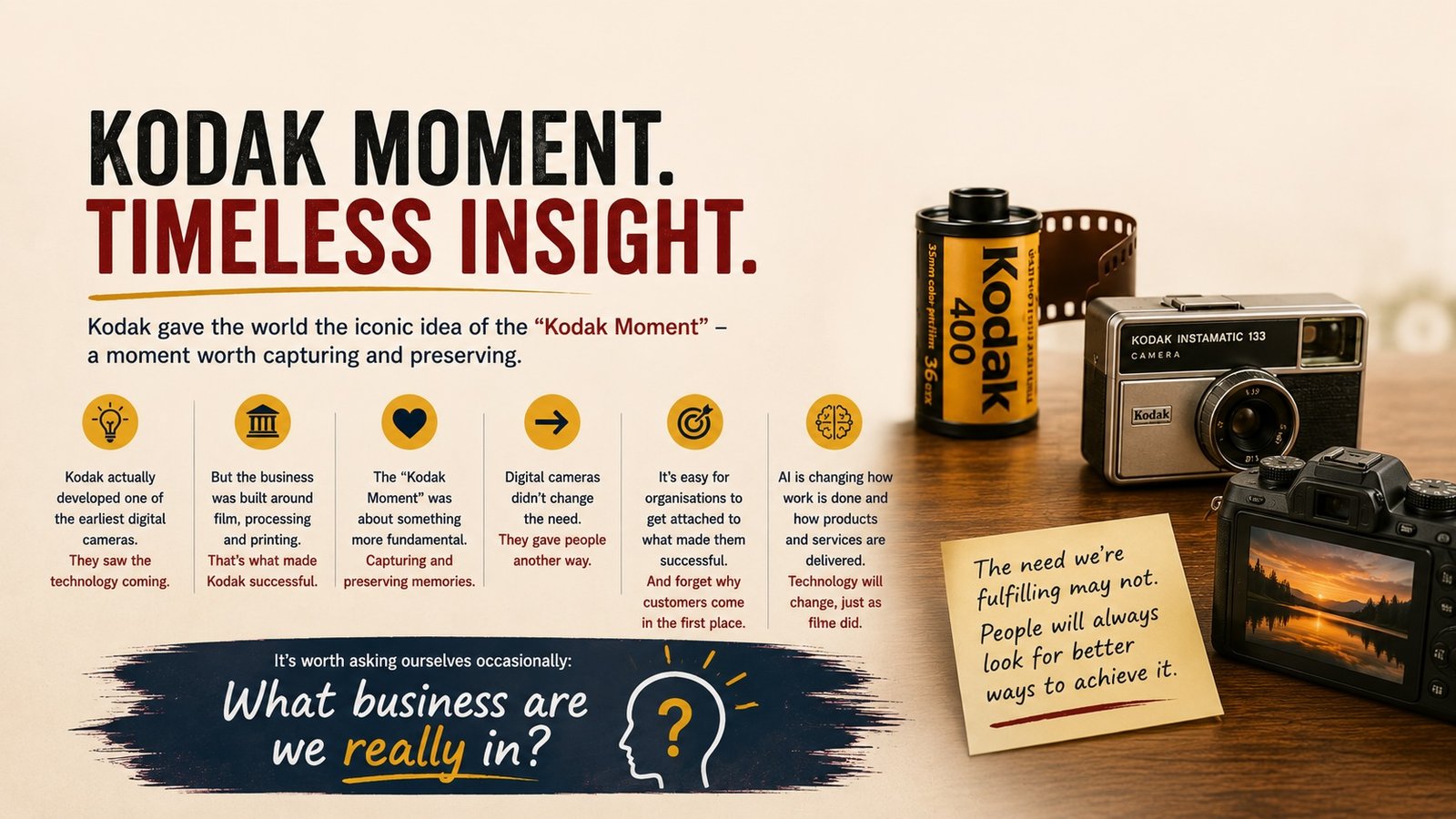
We were talking about how a company that gave the world the iconic idea of the “Kodak Moment” could subsequently struggle with the transition to digital photography.
There’s an interesting irony in the story.
Kodak wasn’t blindsided by digital photography.
One of its own engineers developed an early digital camera in the 1970s.
They had seen the technology coming.
And yet, when photography eventually made the transition from film to digital, Kodak struggled to make the transition with it.
That got us talking about a question that is particularly relevant to businesses today.
What business are you really in?
The Kodak Moment Was Bigger Than Film
For much of its history, Kodak had an incredibly successful business.
It sold film.
People took photographs.
The film needed to be processed.
Photographs needed to be printed.
The entire ecosystem generated revenue.
It’s easy to understand why an organisation would want to protect something that had worked so well for so long.
But Kodak itself had already given us a clue to what customers actually valued.
The Kodak Moment.
People weren’t waking up in the morning wanting to consume more rolls of film.
They wanted to capture their child’s birthday.
Their wedding.
A holiday.
A graduation.
A family gathering.
They wanted to preserve a moment so they could return to it years later.
Film was simply the technology that allowed them to do it.
Digital photography didn’t make that need disappear.
It gave customers a different way of fulfilling it.
Success Can Make It Harder to See Change
I think this is one of the most difficult challenges for any successful organisation.
The products, technologies and processes that brought you success naturally become deeply embedded in the business.
You hire people around them.
You create departments around them.
You develop expertise around them.
You build revenue models around them.
You invest in infrastructure to support them.
Eventually, the organisation can begin defining itself by what it does rather than why customers come to it.
That’s understandable.
After all, the existing business is paying the bills.
But it can also make change much harder.
Because a new technology isn’t simply asking the organisation to adopt something new.
It may be challenging something the organisation has spent decades becoming exceptionally good at.
Knowing About a Technology Isn’t the Same as Transforming Around It
This is the part of the Kodak story that I find particularly interesting.
They knew about digital photography.
They had technical capability.
They had people who understood where the technology could go.
But recognising a technology and reorganising a business around what that technology changes are two very different things.
I think that’s an important distinction as organisations think about AI today.
Most business leaders now know AI is coming.
In many organisations, it has already arrived.
Employees are experimenting with it.
Companies are running workshops.
AI assistants are being introduced.
Proofs of concept are being built.
The awareness is there.
But awareness alone doesn’t create transformation.
The harder question is what AI changes about the way your organisation creates value.
Don’t Ask Only What AI Can Do
It’s tempting to approach AI by looking at existing work and asking:
“Can AI do this?”
Can it answer these customer enquiries?
Can it produce this report?
Can it automate this process?
Can it analyse this information?
Those are useful questions.
But they’re still looking at the future through the structure of today’s business.
There’s another question worth asking:
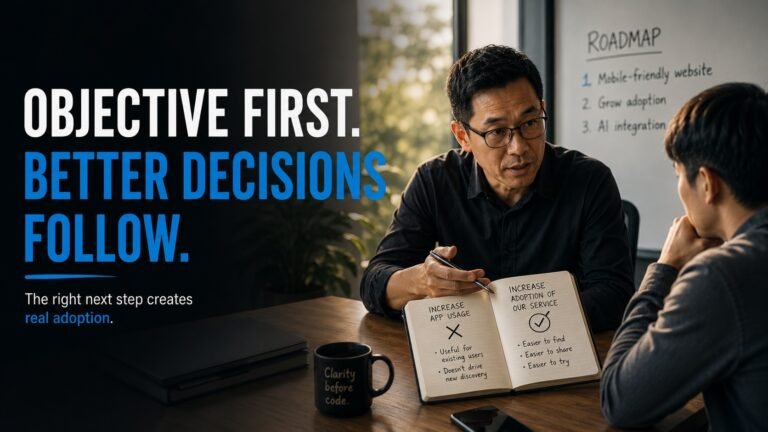
If we were designing this business today, knowing what AI can now do, would we still do it this way?
That question can be considerably more uncomfortable.
It might challenge a process that has existed for years.
It might change the role employees play.
It might change how customers interact with the business.
It may even change what customers are willing to pay for.
That’s when AI stops being another technology project and starts becoming a business transformation conversation.
Start With What the Customer Is Really Buying
The Kodak Moment is a useful reminder because the customer need was remarkably durable.
The technology wasn’t.
Film became digital cameras.
Digital cameras were increasingly displaced by smartphones.
Printed photographs became digital galleries and cloud storage.
Today, AI is even changing how photographs can be searched, edited, organised and created.
The technology keeps moving.
But people still want to capture and preserve moments.
That’s why I think one of the most valuable questions a business can ask has very little to do with technology:
What is the customer really coming to us for?
A hotel isn’t simply selling a room.
A bank isn’t simply selling a bank account.
A retailer isn’t simply selling products on shelves.
A university isn’t simply selling lectures.
Understanding the underlying need gives an organisation far more room to evolve as technology changes.
AI Will Change Too
There’s another lesson here that I think we sometimes forget amid the current excitement around AI.
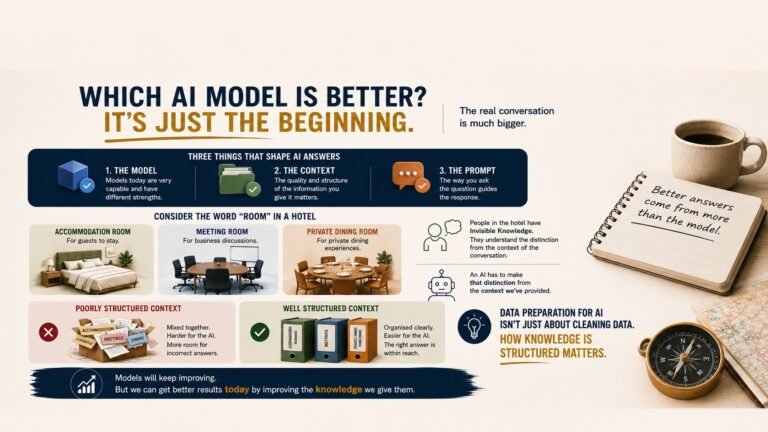
The AI technologies we’re using today won’t remain the same.
Models will improve.
Interfaces will change.
Agents will become more capable.
Some of today’s AI companies will become enormous.
Others may disappear.
The technology we’re excited about today may eventually feel as ordinary as digital photography does now.
So I wouldn’t build a business strategy around today’s AI technology.
I’d build it around the value the organisation wants to create.
Then use the best technology available to deliver that value.
What Business Are You Really In?
The Kodak story is often told as a warning about failing to embrace new technology.
I think there’s a more useful lesson.
Don’t confuse the technology that made you successful with the reason customers chose you in the first place.
Those aren’t always the same thing.
That’s particularly important now.
AI will change how work gets done.
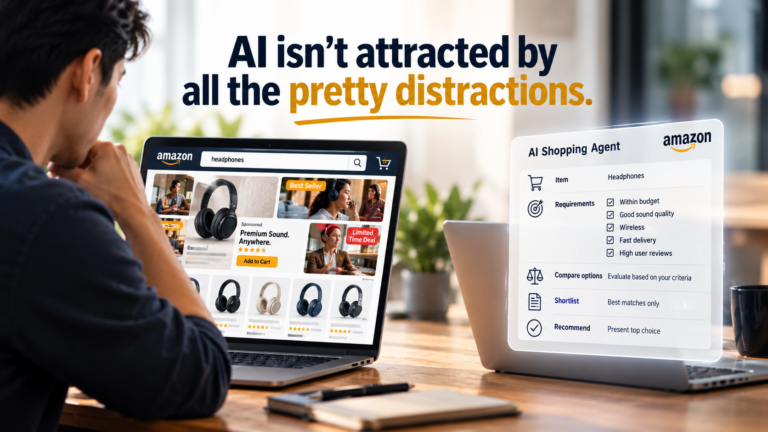
It will change how customers discover businesses.
It will change how services are delivered.
It will change what employees are capable of doing.
And it will undoubtedly challenge business models that currently look perfectly healthy.
The answer isn’t to chase every new AI development.
It’s to understand what shouldn’t change even when everything around it does.
Your products may change.
Your processes may change.
The technology certainly will.
The need you’re fulfilling may not.
Every organisation should occasionally stop and ask itself:
What business are we really in?
The answer may matter far more than which technology comes next.