HRM May Soon Stand for Something Different
HRM has always stood for Human Resource Management
I sometimes wonder how long that definition will remain entirely accurate.
As organisations begin adopting AI, HR may find itself managing more than just people.
That probably sounds strange.
After all, AI doesn’t apply for jobs.
It doesn’t receive a salary.
It doesn’t go on annual leave.
It won’t appear on the payroll.
Yet if AI is going to contribute meaningfully to an organisation, someone still needs to manage it.
Not in the traditional sense of managing employees, but in the sense of helping it become a productive member of the organisation.
That means giving it context.
Teaching it how your business works.
Helping it understand your products, your customers and your processes.
Refining it when it makes mistakes.
Improving it as your business evolves.
In many ways, that doesn’t sound entirely different from developing people.
What I Am Doing Now
One of the things I’ve noticed over the past couple of years is that my relationship with AI has changed dramatically.
When I first started experimenting with AI, I treated it like software.
I’d ask a question.
It would give me an answer.
I’d move on.
Today, that’s no longer how I work.
Some of the AI agents I use have become specialised members of my team.
One helps me think through business strategy.
Another challenges my assumptions when I’m writing.
Others help me analyse customer conversations, prepare workshops or review proposals.
I spend less time simply using them and far more time improving them.
I give them additional context.
I refine how they respond.
I correct them when they’re wrong.
I teach them how I think.
The better they understand my business, the more valuable they become.
At some point I realised something interesting.
I wasn’t just using software anymore.
I was developing capability.
AI Agents Need More Than Installation
When organisations think about deploying AI, they often focus on implementation.
Install the platform.
Connect the data.
Launch the chatbot.
Job done.
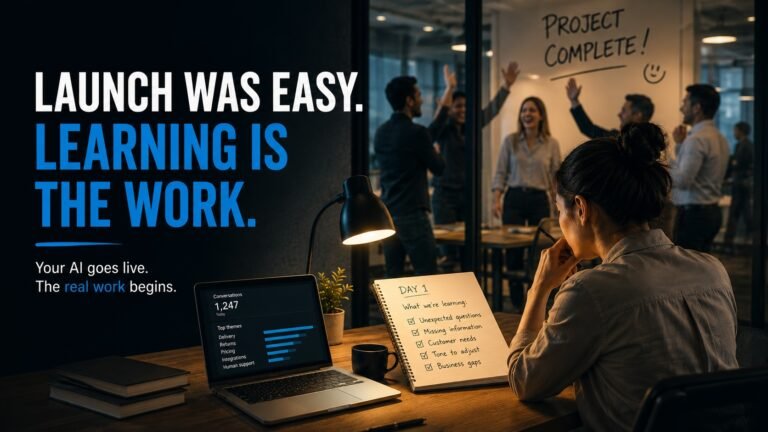
In reality, that’s only the beginning.
Just as a new employee isn’t expected to understand your organisation on their first day, neither does an AI agent.
It needs onboarding.
It needs knowledge.
It needs feedback.
It needs governance.
It needs continuous improvement.
Left alone, an AI agent doesn’t naturally become more valuable.
It becomes more valuable because people invest time in helping it understand the organisation better.
That’s why I often describe AI implementation as less of a technology project and more of an organisational capability project.
HR’s Role May Become Much Bigger
Traditionally, HR has been responsible for helping organisations get the best from their people.
Recruiting.
Developing.
Training.
Performance management.
Knowledge sharing.
Culture.
Those responsibilities aren’t going away.
If anything, they become even more important in an AI-enabled organisation.
But I also wonder whether HR will gradually find itself helping organisations manage another kind of resource.
Not human resources.
AI resources.
Ensuring they have the right knowledge.
Ensuring they’re aligned with company policies.
Ensuring they’re updated as products change.
Ensuring they operate responsibly.
Perhaps HR won’t own all of those responsibilities.
Some may sit with operations.
Some with IT.
Some with business units.
But someone will need to think about how AI becomes a productive contributor to the organisation rather than simply another piece of software.
From Human Resources to Hired Resources
This led me to a thought that I haven’t quite been able to shake.
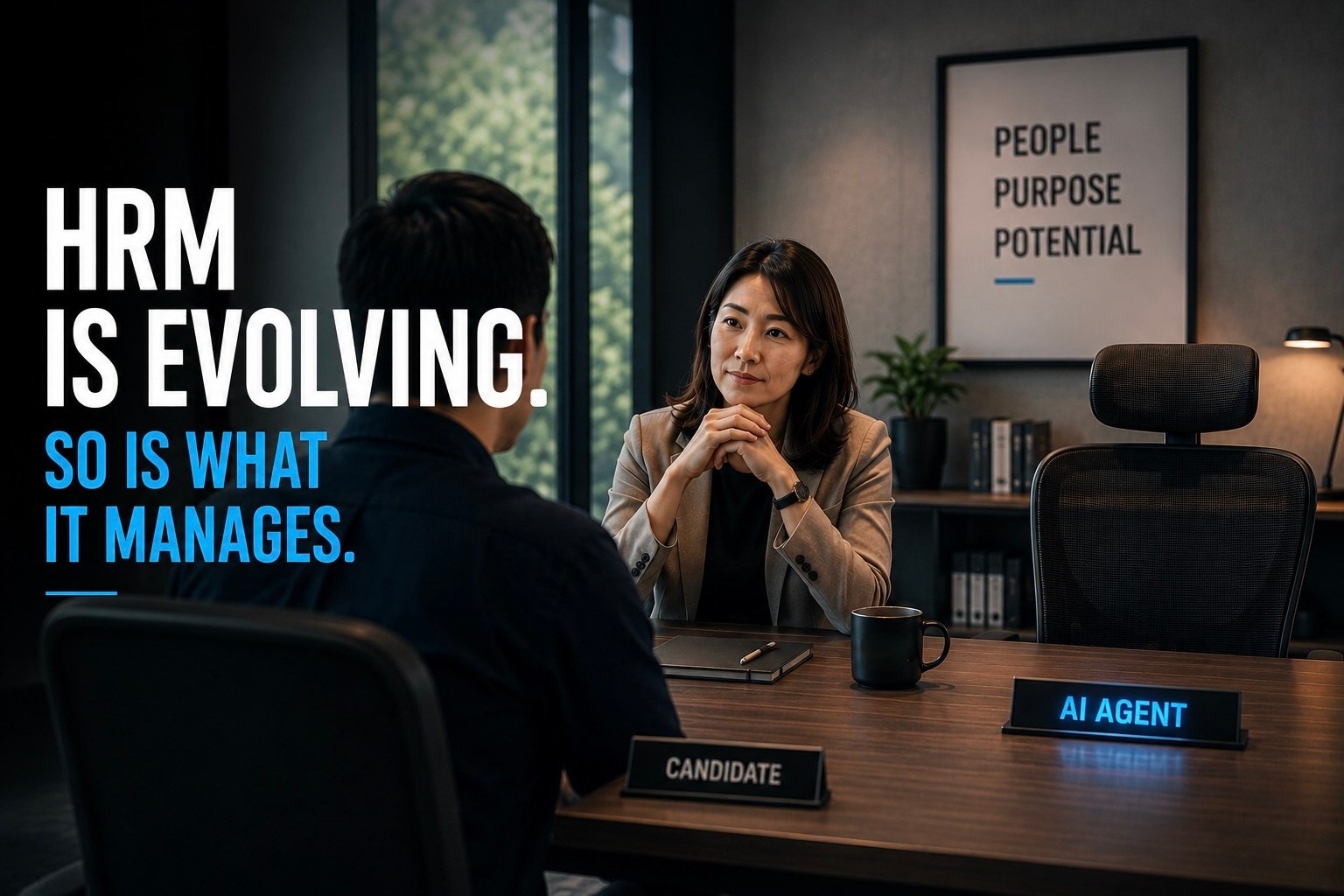
Perhaps one day HR won’t only stand for Human Resource Management.
Perhaps it will become the function responsible for managing an organisation’s Hired Resources.
Some of those resources will be people.
Some may be AI agents.
Each with different strengths.
Each contributing in different ways.
The role of leadership won’t be deciding whether humans or AI are more important.
It will be understanding how both can work together to create better outcomes.
The Future Isn’t Human or AI
Much of the public conversation around AI focuses on replacement.
Will AI replace jobs?
Will AI replace people?
I think that’s the wrong conversation.
The organisations that succeed won’t necessarily be those with the most AI.
They’ll be the ones that become best at orchestrating the strengths of both humans and AI.
Humans bring judgement.
Empathy.
Creativity.
Relationships.
AI brings speed.
Consistency.
Scale.
Knowledge retrieval.
The future belongs to organisations that know how to combine both.
Because AI isn’t replacing the workforce.
It’s becoming part of it.