I am no longer using AI
That may sound like a strange thing to say.
A year or two ago, I would have said I was an AI user.
I’d ask a question.
AI would give me an answer.
I’d move on.
It wasn’t all that different from using a search engine, except the answers were more comprehensive and conversational.
AI was a tool.
Useful, certainly.
But still a tool.
Somewhere along the way, that changed.
I Spend More Time Improving AI Than Using It
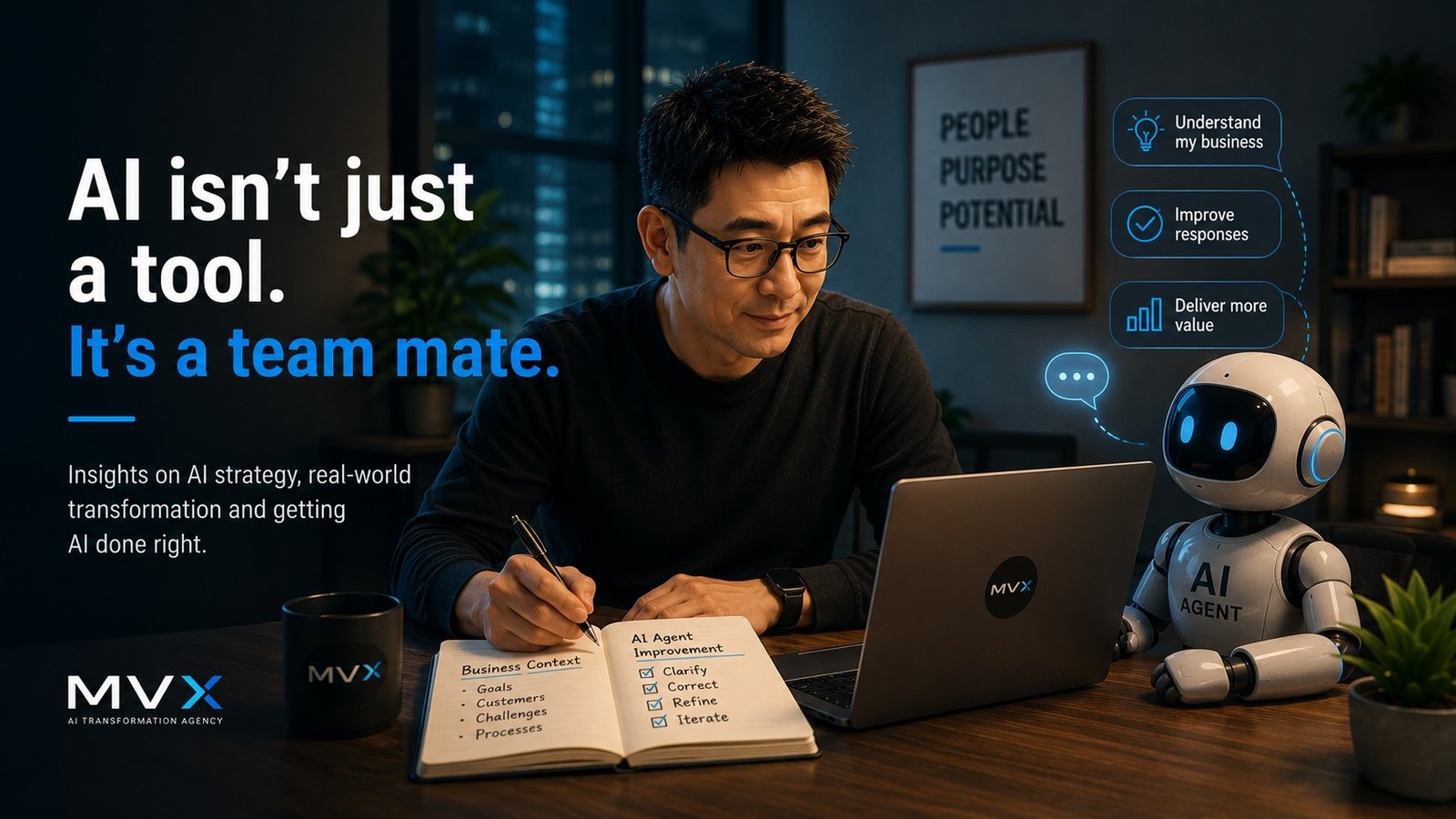
Today, I spend less time asking my AI agents questions than I do helping them become better.
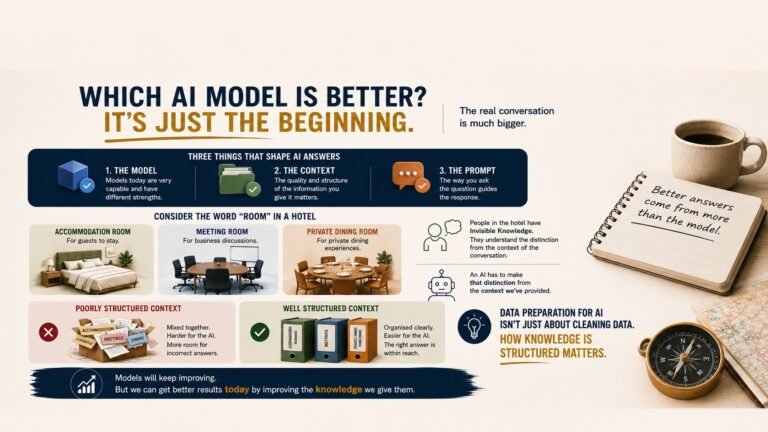
I give them context about my business.
I explain how I like things done.
I correct them when they misunderstand something.
I refine the way they respond.
Sometimes we’ll go back and forth several times before I’m happy with the outcome.
What’s interesting is that I no longer see this as wasted effort.
Every improvement compounds.
The next conversation becomes better.
The one after that becomes even more valuable.
Over time, the AI starts to understand not just the information I need, but how I think, how I write and how I approach problems.
That was the moment something clicked.
I wasn’t simply using AI anymore.
I was developing capability.
It Feels Surprisingly Familiar
The more I thought about it, the more it reminded me of building a team.
When someone joins your organisation, you don’t expect them to understand everything on the first day.
You invest time.
You explain the business.
You share context.
You correct misunderstandings.
You coach.
You provide feedback.
Gradually, they become more effective because they’ve learned how your organisation works.
I’ve realised I now do exactly the same thing with my AI agents.
The more they understand the business, the more valuable they become.
The relationship isn’t transactional anymore.
It’s developmental.
This Changes How We Should Think About AI
I think this may be one of the biggest mindset shifts AI brings to organisations.
Many businesses still evaluate AI the way they evaluate software.
Install it.
Use it.
Move on.
But AI doesn’t create its greatest value that way.
Unlike traditional software, AI becomes more useful as you invest in it.
Not by changing the technology.
But by improving its understanding of your business.
Your products.
Your customers.
Your processes.
Your way of making decisions.
The organisations that benefit most from AI won’t necessarily be those using the latest model.
They’ll be the ones that have spent time helping their AI understand the organisation.
AI Isn’t Learning Your Business By Magic
One misconception I occasionally hear is that AI will simply figure everything out.
It won’t.
Just as a new employee needs onboarding, AI needs context.
It needs examples.
It needs feedback.
It needs access to organisational knowledge.
It needs to understand what good looks like in your business.
Without that investment, AI remains generic.
With that investment, it starts becoming genuinely useful.
That’s an important distinction.
The competitive advantage doesn’t come from having access to AI.
Everyone has access to AI.
The advantage comes from building AI that understands your organisation better than anyone else’s.
The New Management Skill
I sometimes wonder whether, in a few years’ time, one of the most valuable leadership skills won’t be managing people alone.
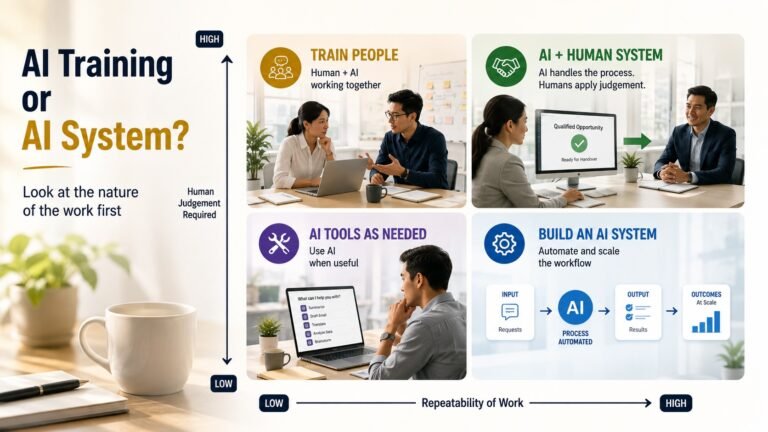
It will be managing teams made up of both people and AI.
Not because AI replaces employees.
But because AI becomes another contributor to the organisation.
It has strengths.
It has weaknesses.
It needs guidance.
It benefits from feedback.
It improves over time.
That doesn’t sound very different from managing a team.
In fact, I think the organisations that will create the greatest value from AI won’t necessarily have the most advanced technology.
They’ll have leaders who know how to develop both human capability and AI capability together.
AI Is Becoming a Team Member
When people ask me how they should think about AI, I no longer describe it as just another tool.
Tools don’t improve because you coach them.
Tools don’t become more valuable because you give them context.
Tools don’t gradually understand your business better.
AI does.
Perhaps that’s one of the biggest mindset shifts we’re all going to make over the next few years.
AI isn’t just another application we’ll install.
It’s another team member we’ll learn to work with.
And just like every good team member, the more you invest in helping it succeed, the more value it creates for everyone around it.